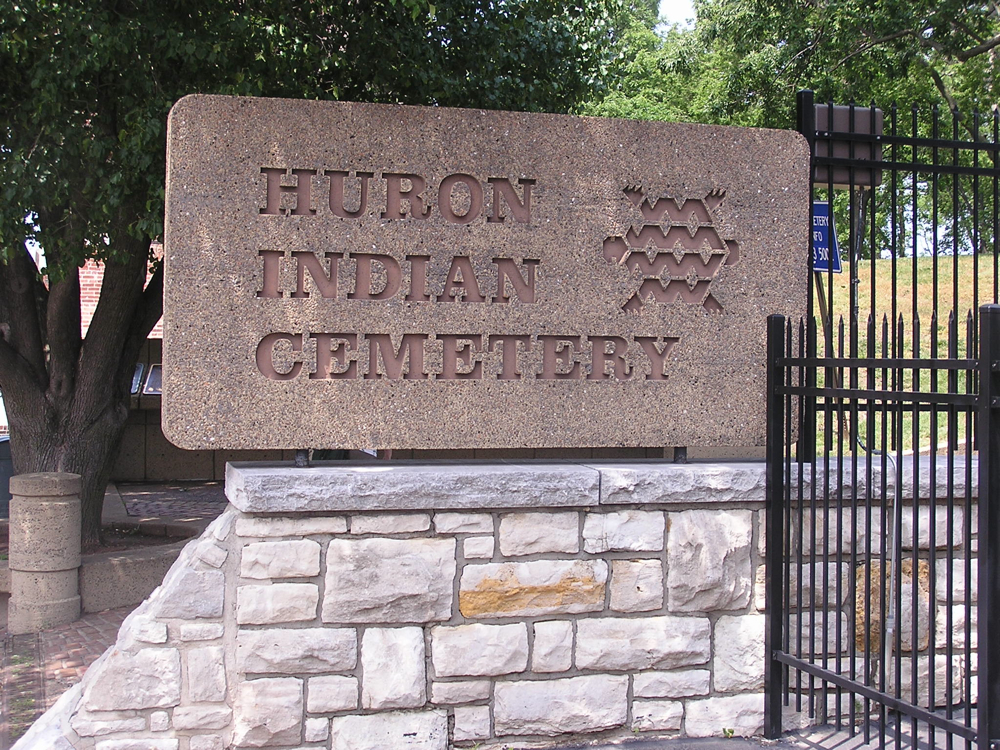
The Conley Sisters and The Wyandot National Burying Ground
The Wyandot National Burying Ground is the longest standing sacred site for the Wyandot Nation in Kansas. It was founded in 1843, just after their forced removal from Ohio. The Nation was left on the banks of the Missouri and Kansas rivers where disease killed over 100 people by 1844. The Nation took these people to the highest hill in the area and founded the cemetery. This cemetery still stands today, though without the Conley sisters and their decade’s long fight to save it, it would be gone. Not only did they preserve this site, but they laid the legal groundwork for protection of Native land for decades to come.
Timeline of the Wyandot National Burying Ground
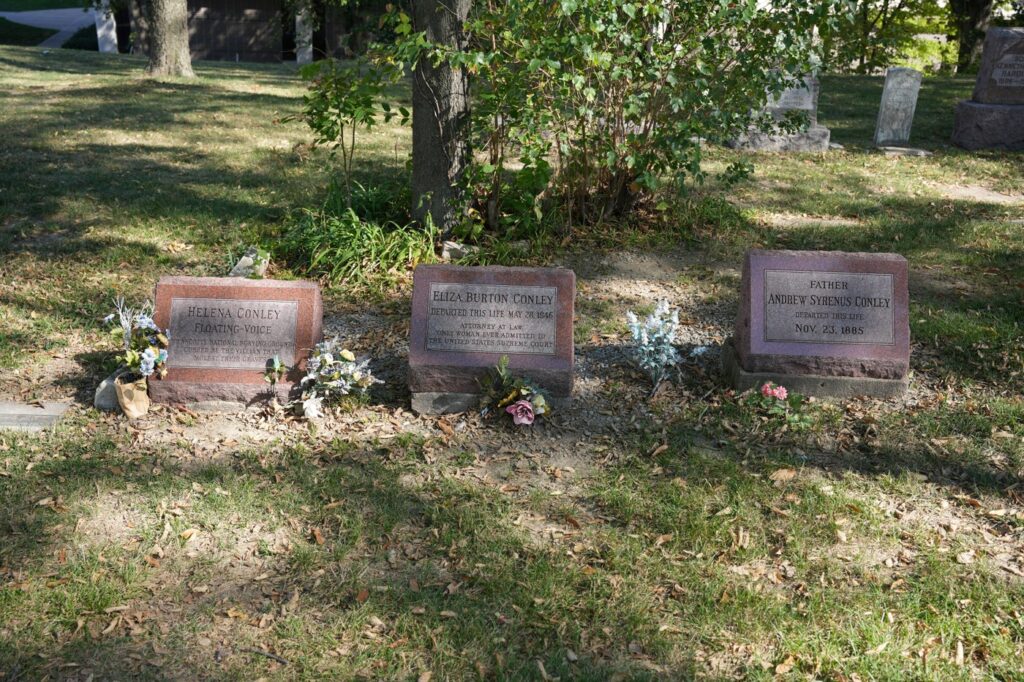
This timeline was compiled by Janith English and Larry Hancks
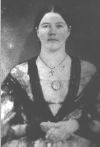
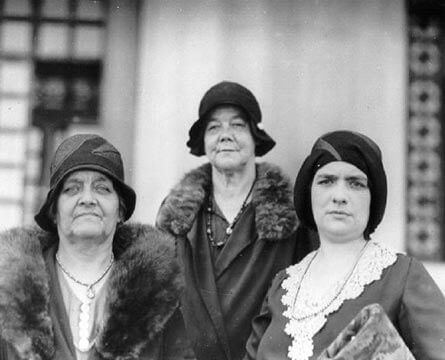
Eliza Burton Zane Conley (left) had four daughters, Lyda, Lena, Ida, and Sallie. These women descended from Chief Tarhe, an eighteenth-century Wyandot leader revered for his defense of the Ohio Country before the Indian Removal Act. Sallie was the oldest, born in 1856. Ida Conley was born in the early part of 1863. Helena “Lena” Conley, was born September 10, 1864, followed by Eliza Burton “Lyda” Conley, born March 1869. Growing up in Nearman and Quindaro Township, Kansas, the sisters had access to educational opportunities. They attended the historic school district 18, a one-room schoolhouse known as the Nearman School, in rural Wyandotte County. While young, loss strengthened the sisters’ relationship with each other, and with the cemetery. Their mother passed away in 1879, Sallie in early 1880, and their father in 1885. The sisters buried all three in what was then called the Huron Burial Ground.
After their father’s death, the sisters lived in poverty, but they worked to better their lives. Education was key to advancement. Ida worked as a cook in the country jail in order to pay bills and support Lyda and Lena’s schooling . The two sisters attended Park College in Parkville, Missouri, rowing across the Missouri River in the family boat each day. Lyda trained to become a telegraphic operator and later taught telegraphy at Spalding Business College.
The cemetery remained in the forefront of their minds. Lyda understood that if the cemetery was going to stand, it would need legal protection. To this end, she entered law school and graduated from the Kansas City College of Law in 1902. She became the first woman admitted to the Kansas Bar Association. That degree would be important in her battles with the US government.
Fort Conley: The Cemetery under Siege
While the Conley sisters were growing up, Kansas City, Kansas was expanding. The city engulfed the land around the cemetery, and investors eyed the property for development. The first inclination towards selling the land was in 1890 when Senator Preston B. Plank labeled the cemetery a “nuisance” and attempted to have the government put it up for sale. Though his resolution failed, the effort attracted the attention of local amateur historian and businessman William Elsey Connelly. He began negotiations with the Wyandotte Nation of Oklahoma, ignoring the claim the Wyandot of Kansas had over their burial ground. The Oklahoma Wyandotte named him their government agent and promised him a 15% commission on the sale if he could get it done.
It took him over five years, but Connelly and a collection of local business leaders managed to push in a clause in a 1906 appropriations act that authorized the Secretary of the Interior to sell the Huron Cemetery land and relocate the buried remains. Unwilling to accept that the government would disturb her ancestors’ graves, Lyda Conley chose to fight.
In late summer 1906, Lyda and Lena padlocked the gate, hung a sign warning “Trespassers Beware!” and erected a make-shift, 6×8 foot structure to establish possession of the land and act as security to keep unwanted developers away. Named Fort Conley, the structure served as a guard station where the sisters defended the land with their father’s double barreled shotgun. Lena Conley felt a spiritual calling to fight for the cemetery. She told a reporter that “My father’s spirit came to me in a dream and was unhappy and I knew what that meant. The dead want this holy place defended and it will be.”
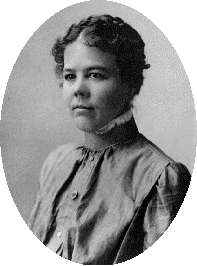
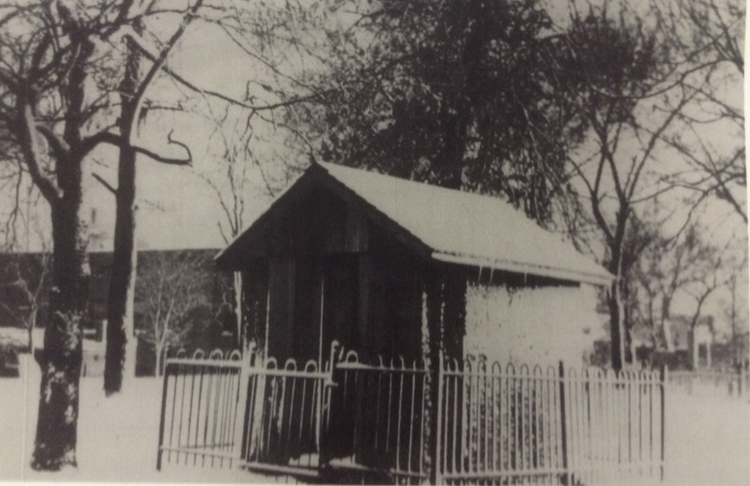
“In this cemetery are buried one-hundred of our ancestors … Why should we not be proud of our ancestors and protect their graves? We shall do it, and woe be to the man that first attempts to steal a body. We are part owners of the ground and have the right under the law to keep off trespassers, the right a man has to shoot a burglar who enters his home.” Lyda Conley, Kansas City Times, October 25, 1906
Lyda leaned on her legal degree since their occupation would not guarantee the cemetery’s safety. Conley filed a petition for an injunction in the U.S. Circuit Court for the District of Kansas on July 11, 1907 to stop the sale of the land. The federal court ruled against Lyda Conley, but she was prepared to continue the fight.
Conley vs. Ballinger: Lyda and the Supreme Court
While the sisters continued to occupy the fort, Lyda appealed the Kansas ruling against them to the Supreme Court, which was almost immediately accepted, and a hearing slated for the October term in 1907. But administrative delays kept the case off the docket for two years, driving up expenses . Conley had a hard time paying the associated fees that came with arguing before the Supreme Court, even writing a brash letter to the Court itself. “With me,” she wrote, “‘time is money,’ and I cannot afford to spend either in idleness.”
Finally, the court scheduled her hearing for January 14, 1910. Lyda faced one last hurdle. In order to argue in front of the Supreme Court as an attorney, a litigator must have another attorney in good standing sponsor them to take and pass the Supreme Court Bar exam. Conley couldn’t find a sponsor. No lawyer in DC was willing to vouch for a native woman to allow her to take the test. Conley, unsurprisingly, was unfazed.
“I am willing to take the examination, if I can find anyone who will stand to sponsor me. But you know one can plead his own case in any court, and this I intend to do. No lawyer would plead for the grave of my mother as I could, no lawyer could have the heart interest in the case that I have.” Lyda Conley
Not recognized as a barred attorney with the Supreme Court, she argued pro se, meaning “for oneself,” in Conley v. Ballinger.
When she addressed the court, she became the third woman, the second woman attorney, and the first Native American woman to argue before the court. Her strategy was legal as much as it was personal. She pointed to the clause in the 1855 treaty that permanently reserved and appropriated the cemetery as a public burying ground. The government could not touch this land, she argued, and pointed to their own practices to justify her case.
“The Supreme Court of the United States . . . held that whenever a tract of land has been legally appropriated to any purpose, from that moment it becomes severed from the mass of public lands, and no subsequent law or proclamation, or sale will be construed to embrace it. . . and have held, also, that “It is well settled in the United States that Cemeteries are among the purpose for which land may be dedicated, and it is held that, upon such dedications the owner is precluded from exercising his former right over the land.” Lyda Conley to the Supreme Court
If this was not enough for the justices, if their own laws failed to sway them, she hoped that god’s law would. Conley quoted scripture extensively, calling on Abraham, Isaac, and Jacob to bolster her argument. She contended that the first case of record about protecting a cemetery was not one in the Supreme Court’s files, but one from over three thousand years ago, where Proverbs warned, “Remove not the old landmarks, and enter not unto the fields of the Fatherless, for their redeemer is mighty, he shall plead their cause with thee.”
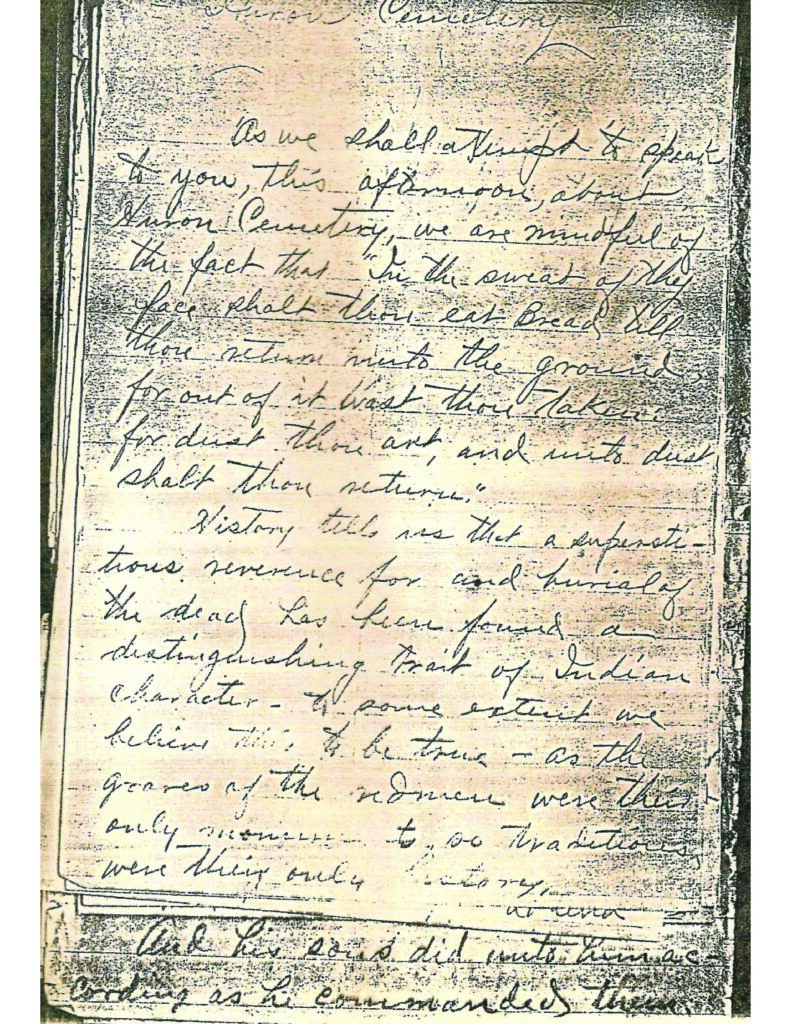
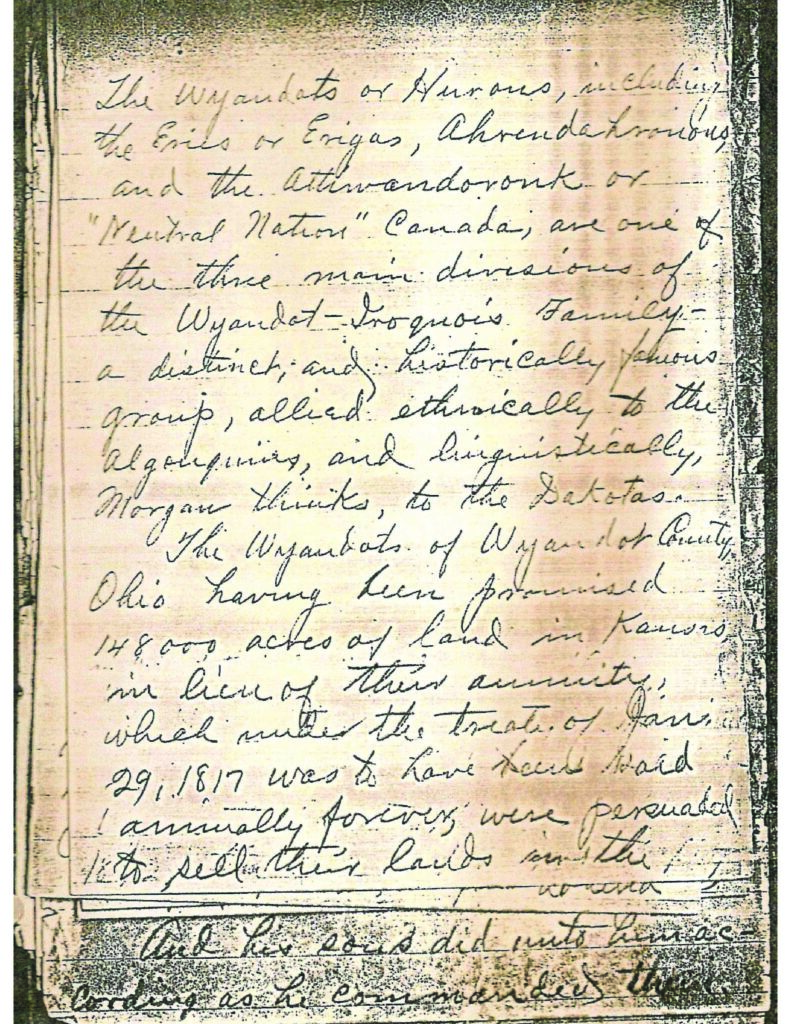
Lyda Conley’s handwritten argument to the Supreme Court
Most powerfully, she combined her Indigenous identity with her United States citizenship. Protecting hallowed ground was not unique to the Wyandot, she argued, but was something that tied all people together.
“Like Jacob of old I too, when I shall be gathered unto my people, desire that they bury me with my fathers in Huron Cemetery, the most sacred and hallowed spot on earth to me, and I cannot believe that this is superstitious reverence any more than I can believe that the reverence every true American has for the grave of Washington at Mount Vernon is a superstitious reverence.” Lyda Conley to the Supreme Court
The Justices, however, were unmoved. In a unanimous decision, the court dismissed the case. The opinion, authored by Chief Justice Oliver Wendell Holmes, insisted that Conley could not claim to own the cemetery simply because she was a Wyandot descendant with family members buried there. Those relationships did not establish any true legal claim to the land, despite old treaties.
That alone might have been enough to dismiss her case, but Holmes went further and drove to the heart of the government’s understanding of its relationship with native peoples. Indigenous nations, Holmes claimed, had no land rights to speak of, whether laid out in a treaty or not. The Treaty of 1855 did not matter, it was not binding. Holmes stated that the land never really belonged to the Wyandot anyway. Rather, it was always the US government’s, and they only allowed the Wyandot to use it.
The United States maintained and protected the Indian use or occupation against others, but was bound itself only by honor, not by law. This mode of statement sounds technical, perhaps, but the principles concerned are not so. The government cannot be supposed to have abandoned merely for a moment, and for a secondary matter, its general attitude toward the Indians as wards over whom and whose property it retained unusual powers so long as they remained set apart from the body of the people. Oliver Wendell Holmes
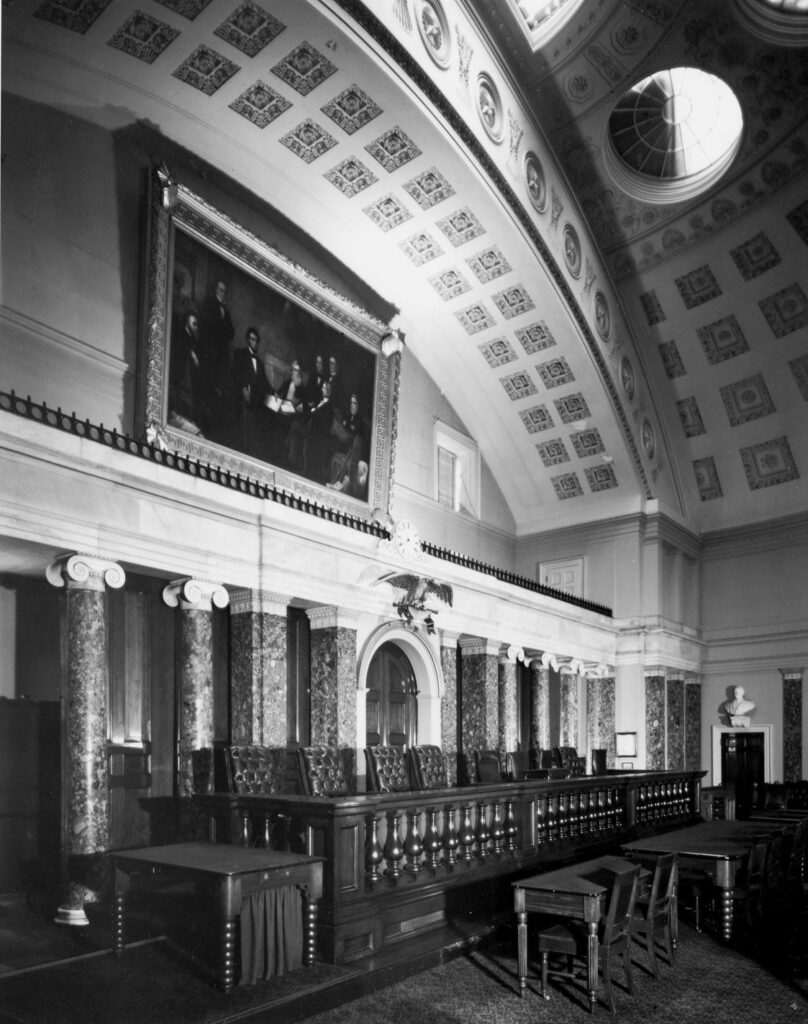
But Conley, according to the Justices, was no longer set apart from the body of the people. They did not recognize her status as a member of the Wyandot Nation. And even if they did recognize that status, the treaty rights were not binding. Instead, Holmes argued that the treaty could only be enforced by the good faith of the United States, “a good faith that would not be broken by a change believed by Congress to be for the welfare of the Indians.”
Ultimately, Holmes’ opinion fell back on the Doctrine of Discovery, the idea that as soon as a White nation saw Indigenous land, it belonged to them. Native Americans were simply allowed to possess it, until they weren’t. Conley had no claim to the cemetery because Wyandot people had no claim to it. In Holmes’ words, the government was bound by honor, not law, and here they chose dishonor because the law could not compel them.
Victory from Defeat: The 1913 Law
Though Lyda lost her case, Fort Conley remained. Since the Supreme Court decision paved the way for the cemetery’s sale, the government was eager to oust the sisters. In July 1910, federal marshals came in and tore down the fort. The sisters rebuilt it, so marshals tore it down again. It took a third assault, and a third reconstruction, for the government to give up on that effort.
By 1912, the government still had not sold the cemetery and by that time, the Conley sisters had attracted nationwide attention for their cause. Their most important support, however, came from Congress itself. Kansas Senator Charles Curtis, who was of Kaw descent himself, took up the cemetery issue in the Senate. He introduced a bill that would repeal the section of the 1906 appropriations act that authorized the sale. In February 1913, his measure passed. Congressional support for the cemetery extended in 1916, when the legislature appropriated $10,000 for renovations and restoration. This was solidified when Kansas City, Kansas, agreed to preserve the cemetery in 1918.
The Fight Continues
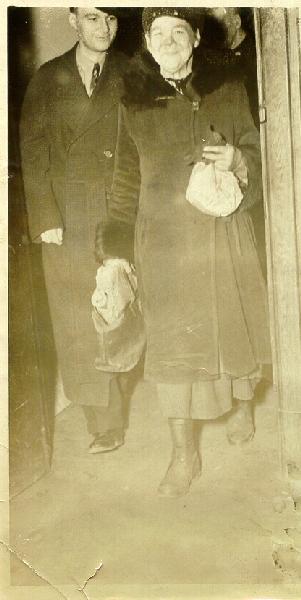
Despite legal protections, the Conley sisters remained the cemetery’s most active defenders, even clashing with the people who claimed to preserve the cemetery. When Kansas City, Kansas began the renovation work in 1918, Lyda ripped out surveyors stakes then bruised and scratched a group of detectives sent to remove her from the site for destroying city property. They fined her $100. Conley, ever the lawyer, filed a federal injunction to stop the construction. Preserving the cemetery was not the problem. Rather, Conley felt that the workmen were careless and disrespectful, digging where they were not supposed to, potentially uncovering the unmarked graves of many Wyandots buried there.
This was not the Conley sisters’ last run-in with the law. In 1922, Lena, who had a reputation for her strength and provocative language, tried to stop the burial of Frank Espy, a white man who was married to a Wyandot. Standing at the head of the open grave, guarded by police, she placed a curse on the burial and on those responsible for allowing him into the Native cemetery.
Later that year, her verbal assaults landed her in jail for foul language. When the judge asked her if this was true, Lena replied matter-of-factly, “No. I was just cursing the souls of trespassers into damnation and hell.” The judge fined her $50, but Lyda talked him into a remittance, with the warning to stay out of the cemetery. “Thanks for the remittance, Judge,” Lyda told him, “but we’ll be right back over there.”
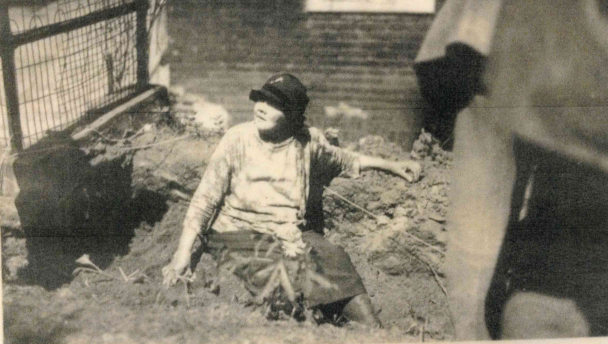
And back over there they were. In 1929, when city laborers started digging for a retaining wall, Lyda sat in the ditch to stop the work. In 1937, she ended up serving a 10 day jail sentence for chasing a group of people off the property with a broomstick.
Their defense could not go on forever, though. In 1946, Lyda was walking back to her home when a man jumped out of the bushes and hit her in the head with a brick to steal her purse. There was 20 cents in it. After holding on through the night, she died the next day, May 28, 1946, and was buried in the Wyandot cemetery.
Almost immediately, the fight for the cemetery reignited. In 1947, the Wyandotte Nation of Oklahoma, in conjunction with Oklahoma Senator Elmer Thomas and Missouri Representative Max Schwabe, introduced a bill to sell the cemetery and disburse the funds to Oklahoma tribal members. Unsurprisingly, Lena and Ida Conley protested the sale.
Perhaps unexpectedly, the Kansas City, Kansas community rallied against the sale as well. Letters poured into congressmen’s offices and local papers protesting the removal of a piece of local history. No one was more vocal than Harry M. Trowbridge. A Kansas City, Kansas native and amateur archeologist, Trowbridge wrote dozens of letters to government officials, ranging from local representatives, to the Secretary of the Interior, to President Harry Truman, and, especially, Kansas Representative Errett P. Scrivner, who fought the efforts into the 1950s.
Chief George Zane led the Wyandot Nation of Kansas against the sale, confronting not just the government, but the Wyandotte Nation of Oklahoma. That group, the only Wyandot Nation recognized by the Federal government, asserted that the Kansans had no right to the cemetery, while Zane insisted that the Kansas Wyandot had the true claim.
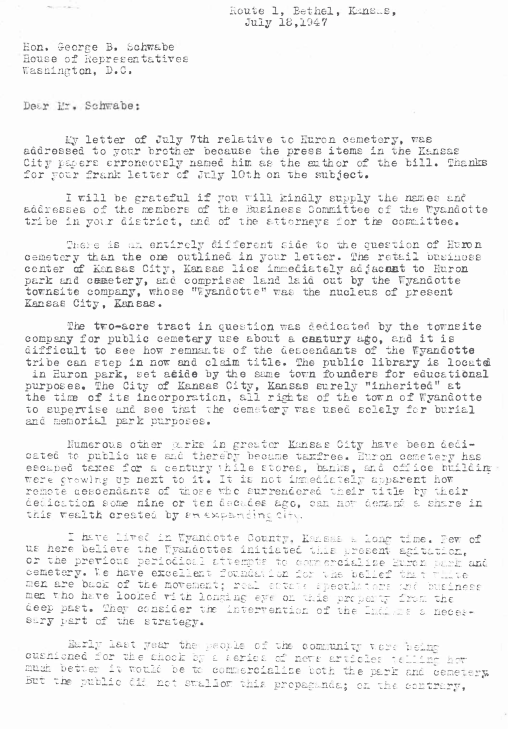
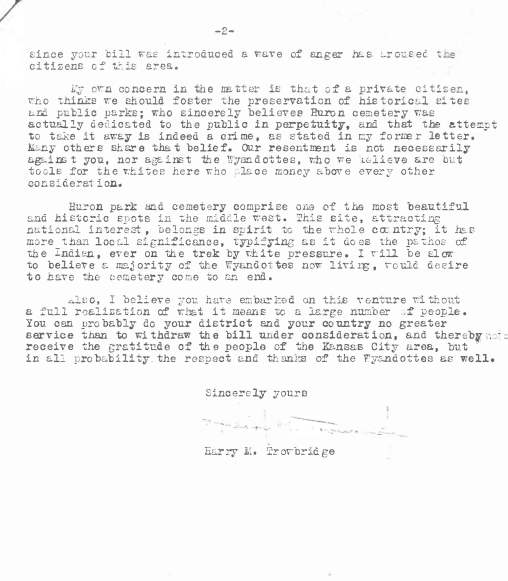
Letter from Harry Trowbridge to Congressman George B. Schwabe. Trowbridge was a White local amateur archeologist and played an instrumental role in stopping the sale of the cemetery in the 40s and 50s.
This sale attempt peaked when in 1956, Congress terminated the Wyandotte Tribe of Oklahoma. Part of the broader Termination policy, Public Law 887 removed the Wyandotte’s tribal status and set about dispersing their lands. Termination was the latest government strategy to answer the “Indian Question.” Rather than removal, this time the government sought to absorb the Indigenous nations, ending their special status, removing their claims to sovereignty, and breaking up the populations on reservations. In the case of the Wyandotte termination law, it also contained a section approving sale of the cemetery.
The Wyandot Nation of Kansas and the Kansas City, Kansas community rallied around the cemetery again. This latest defense would have to occur without a Conley. Lena, the last of the sisters died in 1958. She was buried in the cemetery, with her Wyandot name “Floating Voice” on her headstone, along with the warning, “Cursed be the villain that molest their graves.”
Others continued the Conley’s fight. Considered a local landmark, the Nation and the city joined in a lawsuit in 1959 to repeal the part of the termination act that authorized the sale. Again, the Supreme Court ruled that the Wyandot Nation of Kansas was not a legitimate entity and had no claim. They even cited Conley v. Ballinger as precedent.
Though this cleared the way for the sale once more, there were no buyers. The government never appropriated funds to remove the bodies, and the Wyandotte of Oklahoma would not pay for their removal and transport until a sale was completed.
This gave local activists the time they needed to place the cemetery on the National Register of Historic Places in 1971. Though never a guarantee that the cemetery would remain untouched, historic status made it much harder for anyone to push through a sale. Today, the cemetery remains intact. The Wyandot Nation of Kansas is leading preservation and interpretation efforts to share the site’s history.
Modern Day
In 2016, the cemetery was officially designated as a National Historic Landmark named the Wyandot National Burying Ground, protecting it from incursions in perpetuity.
The most recent act of preservation and remembrance focuses more specifically on the Conley sisters. After hearing a podcast in 2020 from KCUR covering the cemetery, Neysa Page-Lieberman, a Kansas City artist, was inspired to create some type of memorial for the sisters and the cemetery.

Working with Principal Chief Judith Manthe and the Omakyehstih Collective, Monumenta has created a traveling art exhibit, Trespassers Beware! This recreation of Fort Conley features reenactments, soundscapes, and historical information. It will move around the greater Kansas City area until it arrives at the Kansas City, Kansas Public Library, next to the Wyandot National Burying Ground, where the original fort stood.
Sources
For a more exhaustive list of secondary sources regarding Wyandot History, see the Research Resources Page
Selected Primary Sources about the Conley Sisters and the Wyandot National Burying Ground
- Conley v. Ballinger: Chief Justice Oliver Wendell Holmes’ written decision.
- Lyda Conley’s Argument before the Supreme Court: Transcribed from her handwritten records by Darren English
- S. 1372, 1947 Approval to sell the Wyandot Burying Ground: Senate Resolution giving the Wyandotte of Oklahoma permission to sell the Wyandot National Burying Ground
- An Act to To provide for the termination of Federal supervision over the property of the Wyandotte Tribe of Oklahoma, August 1, 1956: This law terminated the Wyandotte Nation of Oklahoma in 1956.
- H.R. 3659, An act to authorize the President to proclaim the Wyandot National Burying Ground a monument: This bill was proposed by Errett P. Scrivner in 1949 and failed to pass.
- Newspaper records are an invaluable resource for learning about the Conley sisters. Websites like Chronicling America and Newspapers.com allow you to access many papers from home. Chronicling America is free, while Newspapers.com is a paid service. Many public libraries have access for cardholders for free however. We recommend the following papers for coverage of the Conleys:
- Kansas City Star
- Kansas City, Kansas Republic
- Kansas City Kansan
- Kansas City Globe
- Kansas City Times
Secondary Sources
- Kim Dayton, ‘“Trespassers, Beware!’: Lyda Burton Conley and the Battle for Huron Place Cemetery,” Yale Journal of Law and Feminism no. 8 (1996)
- James R. Shortridge, Kansas City and How it Grew, 1822-2011 (Lawrence: University Press of Kansas, 2012)
- Samantha Rae Dean, ‘“As Long as Grass Grows and Water Flows”: Lyda Conley and the Huron Indian Cemetery,” Master’s thesis (Fort Hays State University, 2016)
- Diane E. Miller, “Wyandot, Shawnee, and African American Resistance to Slavery in Ohio and Kansas,” dissertation (University of Nebraska, Lincoln, 2019)
- Storms, Strength, and Survival: Wyandot Adaptations on the Kansas Prairies
- “Lyda Conley,” from The NAtional Women’s History Museum
- “Conley Sisters” from the Kansas City, Kansas Public Library