The Wendat Confederacy
The Wyandot Nation has its origins in the Wendat Confederacy, a powerful alliance that formed in the St. Lawrence River Valley before European contact. The Confederacy was made up of four or five distinct nations that had a shared Nadowekian heritage, including speaking dialects of Iroquoian languages. The Confederacy began when the Hatingeennonniahak (“Makers of Cords for Nets) or Cord, allied with the Bear, or the Attinniaoenten (People of the Bear) around 1400. In 1570, the Atahontaenrat, or People of the Deer joined the Confederacy, and in 1610, the Arendaenronnon, or People of the Rock joined as well. A fifth group, the Ataronchronon or People of the Marsh may have joined later, but might not have reached full political membership with the other nations.
The Wendat Confederacy was a matriarchal society, meaning that clans were centered on the female family lines. Women controlled community fields, domestic life, and had significant influence in communal politics. While men served as headmen and war leaders, women exercised substantial control over which men took these positions when they needed to be filled.
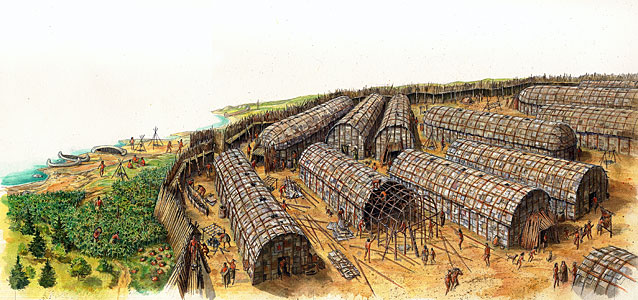
Wendat society was structured around agriculture, especially maize, and palisaded villages where families lived in longhouses. These villages were not exactly permanent, but largely remained in the same place for upwards of twenty years. When the soil around them was exhausted, clans would move to different locations.
The Wendat Confederacy was not a centralized government. Most politics within the Confederacy took place at the local level, among the clans that made up each of the four or five partner nations. Each nation could create their own diplomatic, economic, and military alliances, but there was collective decision making among all parties as well.

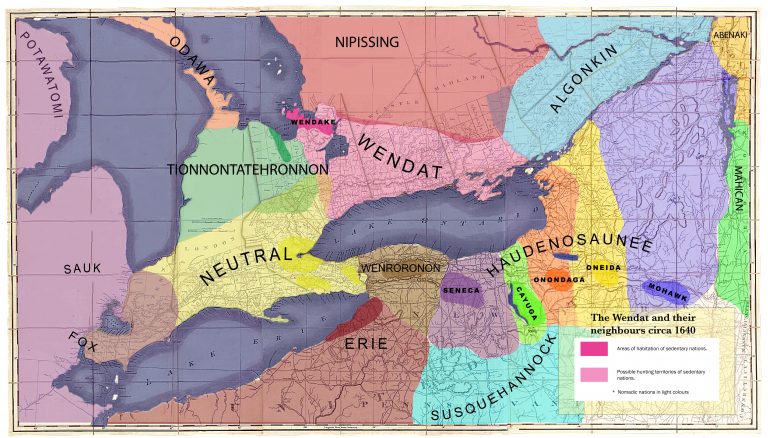
With this political system, the Wendat Confederacy controlled a large area in present-day Canada called Wendake. Stretching from Georgian Bay to Lake Simcoe, 30,000 people lived in the Confederacy at its peak. The Confederacy was one of the major power-players in the region. They shared a long partnership with the Algonquian-speaking Anishinaabe to their west and by the time Europeans arrived in the 1600s, a rivalry with the Nadowekian Haudenosaunee (also known as the Iroquois Confederacy) to their south.
The Wendat and Europeans
The Wendat were anchors in a vast trade network that connected them to the Anishinaabe and other Indigenous nations in the region. Corn and furs were central to this economy, and remained central when the French arrived in the region beginning in 1603. Far from dominating the Native peoples, the French desperately needed allies and trading partners as part of their imperial ambitions. The Wendat saw the French as new allies that could help them compete with the Haudenosaunee as well as advance their own communities.
The French and Wendat established relations in 1603 when Samuel de Champlain arrived in North America. For the French, the Wendat offered a powerful alliance to counter British and Dutch interests farther south. For the Wendat, the French gave new opportunities to combat the Haudenosaunee and extend their own trade networks. Because of this, the French joined the Anishinaabe as key Wendat allies.
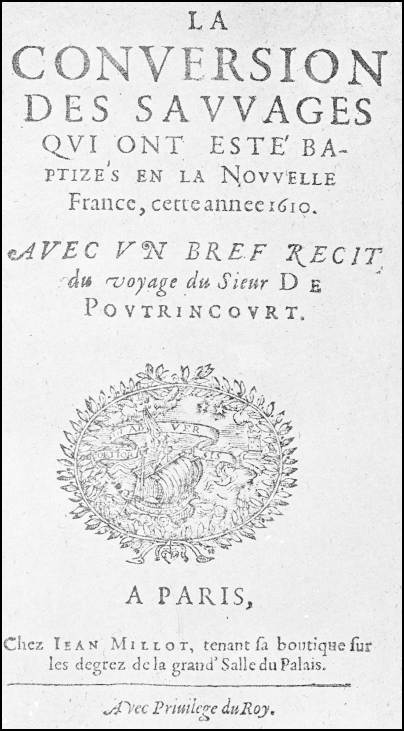
Part of this alliance involved interactions with Jesuit Catholic priests who became an integral part of these new social, political, and religious networks in Wendake. Some Wendat converted to Christianity out of belief. Others converted because the French would only trade firearms with converted Native Americans. Religion, diplomacy, and trade were intertwined for the Wendat and their new French allies.
The French brought disease with their trade goods, however. A series of epidemics swept through the Wendat nations in the early 1600s, killing somewhere between half and two-thirds of the population. By 1650, there were an estimated 12,000 Wendat remaining.
These diseases devastated leadership in the different clans, killing important headmen as well as many of their potential replacements. Along with the very real grief and trauma that came with this immense loss, the political and diplomatic relationships within these clans shifted. Women, who had traditionally played a vital role in selecting new headmen, lost power as the men they could choose from dwindled. On top of this, war leaders began to take over more civil leadership positions, altering how the clans interacted with neighbors.
War was always part of Wendat culture, but most often it was in the form or mourning wars, attacks to either symbolically or literally replace dead kin. With a rapidly falling population, war headmen pushed for increasing combat to capture enemies and fold them into tribal populations. Even with increased warfare, the population continued to decline.
From Wendat to Wyandot
In 1648, these growing issues reached a climax when the Haudenosaunee began a series of attacks against the Wendat Confederacy. In the summer of 1648, the Iroquois took seven hundred captives at St. Joseph. In 1649, they attacked again with a thousand warriors and destroyed the towns of St. Ignace and St. Louis, forcing survivors to flee west.
The attacks continued in 1649, and around 8000 surviving Wendats moved west and onto Gahoendoe, an island in modern-day Lake Huron. Cut off from supplies, unable to plant and harvest quickly enough, and still facing Iroquois threats, starvation set in. Hundreds died on Gahoendoe, and in 1650, the Confederacy made the decision to disperse.
Though the Confederacy broke up, the various groups maintained their ethnic structures and Wendat identity. Some headed east to Montreal and Quebec City, often living in Jesuit communities. Others joined the Iroquois, though they lived as separate nations within that Confederacy. Others moved west and joined with their Anishinaabe allies and another Nadowek nation, the Tionontati, or Tobacco people. The French called these people the Petun.
This new conglomeration of peoples in the west lived in and around Michilimackinac until around 1701 when the Wendat and Petun moved south towards present-day Detroit and Ohio. Over the decades, their shared cultural traits and political identity led them to be referred to as a singular nation. Though the Wendat retained their name themselves, Europeans corrupted the spelling to “Wyandot” in the 18th century. These people became the Wyandot Nation today.
Sources
For a more exhaustive list of secondary sources regarding Wendat and Wyandot History, see the Research Resources Page
Selected Primary Sources about the Wendat Confederacy
Many of these primary sources come from Jesuit Missionaries who lived with the Wendat Confederacy. Because of this, we must remember that these sources are written by and for a European audience, but they can provide useful views into Wendat history and culture.
- Jesuit Relations: Relations were reports to Jesuit leaders in Europe from Missionaries around the world. These relations focus on New France.
- This is a complete copy of all 73 Jesuit relations from New France. They cover multiple decades and include relationships with many nations, including the Wendat.
- Father John Brebuef’s Instructions to the Missionaries
- Huron Carol
Selected Secondary Sources
- Kathryn Magee Labelle, Dispersed but Not Destroyed: A Seventeenth-Century History of the Wendat People (Vancouver: University of British Columbia Press, 2013)
- Bruce G. Trigger, The Children of Aataentsic : A History of the Huron People to 1660 / Bruce G. Trigger (McGill-Queen’s University Press, 1976)
- Conrad E. Heidenreich, Huronia : A History and Geography of the Huron Indians, 1600-1650 (McClelland and Stewart, 1971)