The Wyandot Nation in Kansas
Arrival and Survival in Kansas
The Wyandot Nation arrived in Kansas in the summer of 1843. The treaty they signed with the United States government in 1842 promised them 148,000 acres in Kansas, still designated as Indian territory at that time. But the Wyandot were the last nation from the Ohio River Valley that was forced west by the government. The land they were promised was already occupied by the Shawnee and other native peoples. Instead of being able to build new homes, the steamboats dropped over 700 people on the banks of the Missouri and Kansas rivers and steamed away.
Without permanent shelters and no land to move to, the majority of the nation remained on the river banks during fall and winter 1843. Some of the wealthier members of the nation were able to purchase or rent homes in nearby Westport, but the most could not afford these accommodations. Disease broke out, and by 1844, over 100 people, a full seventh of the remaining Wyandot from Ohio, had died.
The nation secured a burying ground for these people in fall 1843. They claimed a hilltop across the Missouri River from Kansas City and buried their dead. The earliest grave with a datable headstone belonged to Chief Ron-ton-dee who died on November 17, 1843.
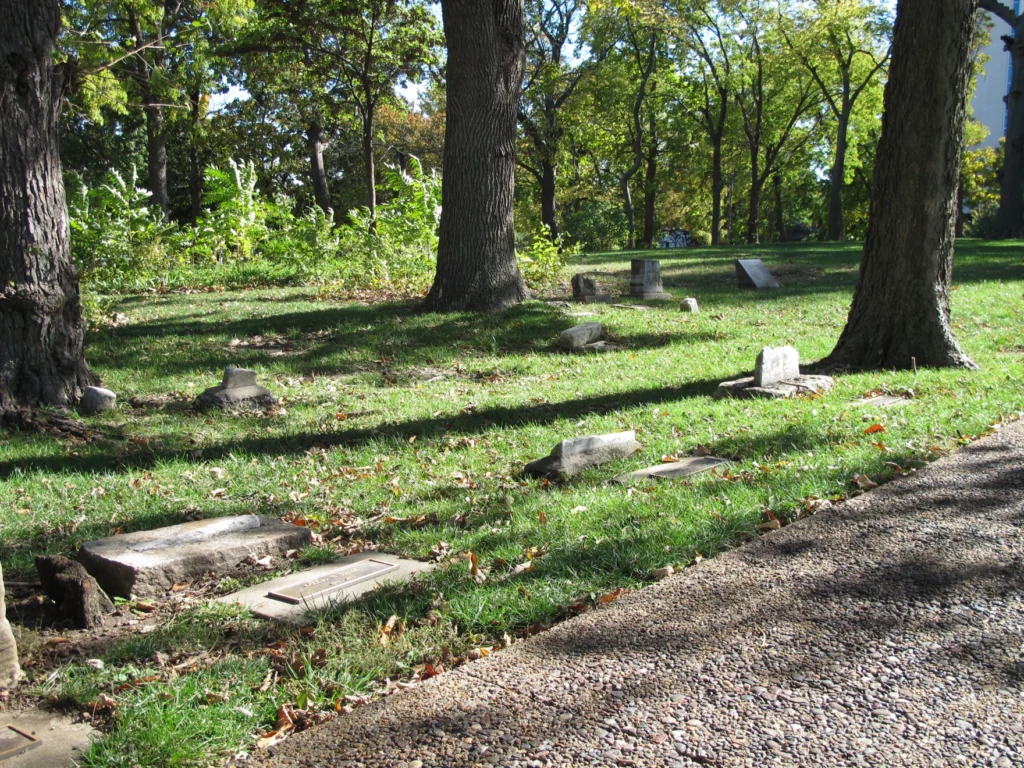
Traditional burial practices did not require headstones for all the dead, so there are probably graves in the Wyandot National Burying Ground that predate this one.
Though they had a place for their dead, the Wyandot still needed to secure a home for their living. Before leaving Ohio, the Wyandot had negotiated with the Shawnee to purchase a section of their land in Kansas, but the Shawnee decided against the sale. Instead, the Wyandot began negotiating with the Delaware, who the US government removed from Ohio in the 1830s. The Wyandot purchased 36 sections of land from the Delaware in a treaty between the two nations negotiated without US government involvement. The Delaware included an additional three sections of land in remembrance of the Wyandot who donated land to the Delaware in Ohio when that nation first came west from their traditional homeland in the Hudson and Delaware river valleys before the American Revolution.
Officially, this treaty was the first between two native nations without US government involvement, but that fact ignores centuries of Indigenous diplomacy. Though this treaty involved the exchange of land and cash, it was just one in a long history of diplomatic agreements between sovereign Indigenous nations.
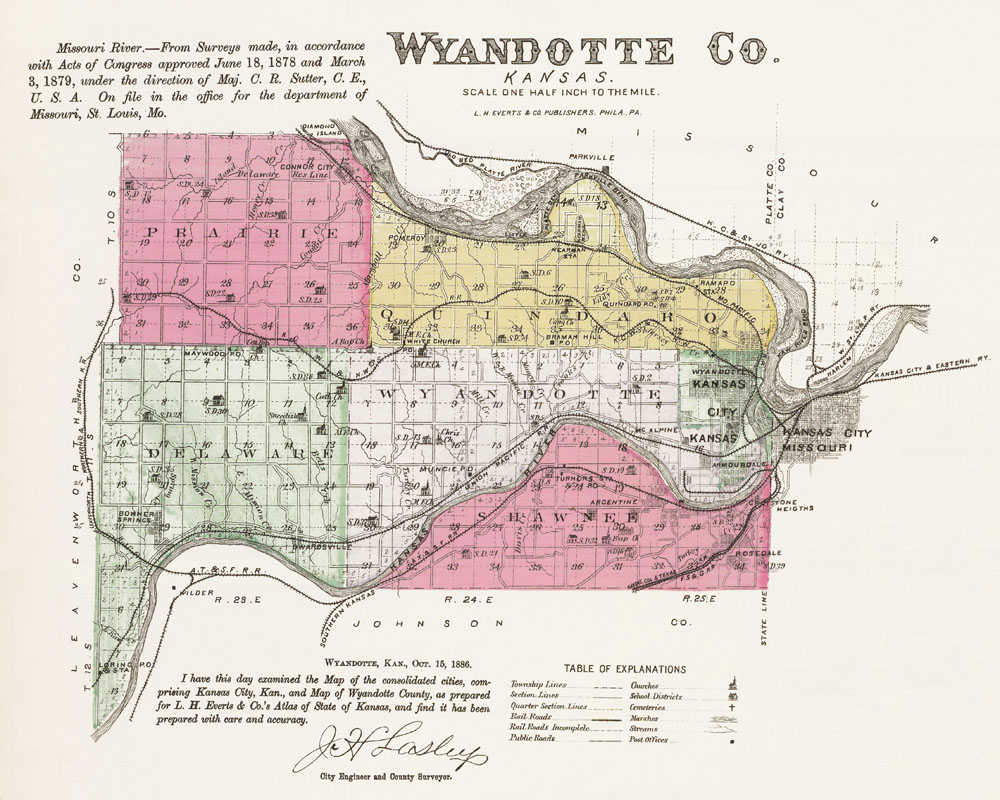
The Wyandot paid $48,000 for land on the isthmus between the Missouri and Kansas rivers, part of what today makes up much of Kansas City, Kansas. The Government never paid the Wyandot back for the land they were supposed to receive. To rectify this, the Wyandot signed a new treaty in 1850 that promised $185,000 in reparations for the acreage the nation was supposed to own in Kansas. The US never paid out this claim either.
Just as they had in Ohio, the Wyandot worked to prosper in Kansas. The principal settlement, Wyandotte City, became part of a trans-continental trade and migration route that stretched from Kansas City west to California and Oregon and South to Santa Fe. Wyandot members built homes, farms, and businesses in the area, becoming social and economic anchors of the growing town and region.
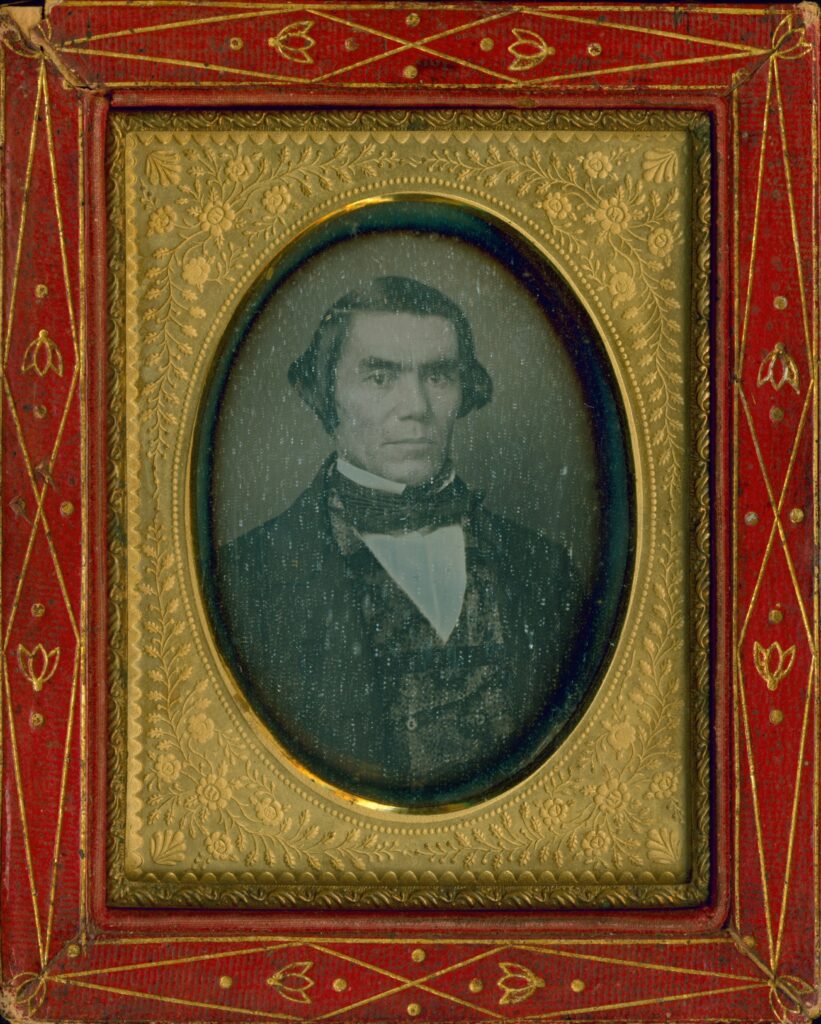
The Wyandot were not living as a nation apart from the white settlers around them. Instead, they were deeply enmeshed in the social and political currents of Kansas and Missouri. People living in Kansas were concerned with government organization of the territory, sought support for a transcontinental rail route, and wanted to control their political destiny. To do so, Wyandots and white settlers elected William Walker as provisional territorial governor. Walker was a leading Wyandot who had scouted the land in Kansas for the nation and continued as a leader in their new home. The Federal government rejected this election since they had not organized the territory nor set up the legal apparatus to govern it, but the Kansans’ move towards self-government helped spur congress towards territorial organization.
The Treaty of 1855 and the Wyandot Split
In 1854, Congress passed the Kansas-Nebraska Act, which divided much of the land remaining from the Louisiana Purchase into two territories. The act is remembered most for its implications in the national debates over slavery. The act repealed the Missouri Compromise that barred slavery from the territory north of Missouri’s bottom border, including what would become Kansas. While it did not openly protect slavery, it did allow for “popular sovereignty,” where voters in the territories would decide whether or not slavery would be permitted.
Most of the Wyandot held staunch anti-slavery views. A combination of their time in Ohio, Methodism, and their interaction with free Black people ensured that the Wyandot generally rejected slavery. While in Ohio and Kansas, oral histories record stories of Wyandots helping freedom seekers in their journeys north. In the Old Quindaro Cemetery, stories confirm that an old Catalpa served as a signal tree for runaways from Missouri. Wyandots would use the perch to relay messages about slave catchers in the area.
Other Wyandots, though a much smaller portion, participated in chattel slavery. William Walker and Joel Walker both enslaved people. These men made up the minority in a predominantly anti-slavery community, however.
For most Wyandot, the pressing issue was not whether or not slavery would exist in Kansas, but where they would exist in a newly organized territory. The government once again wanted Indigenous land for white settlement, which meant another round of removal for many nations. After the Kansas-Nebraska Act, both the Shawnee and the Delaware were removed again, this time to Oklahoma. The Wyandot faced a similar choice, barely a decade after they had been forced from Ohio.
Wyandot leadership found a way out of removal, but at a cost. As one of the “five civilized tribes” of Ohio, the US government looked on the Wyandot as more “advanced” than other Indigenous nations. Because of this racist view, they Federal government was willing to negotiate a treaty that would allow the Wyandot to become United States citizens. The Wyandot leadership saw this as a way to preserve their land rights in Kansas and avoid another removal for their people.
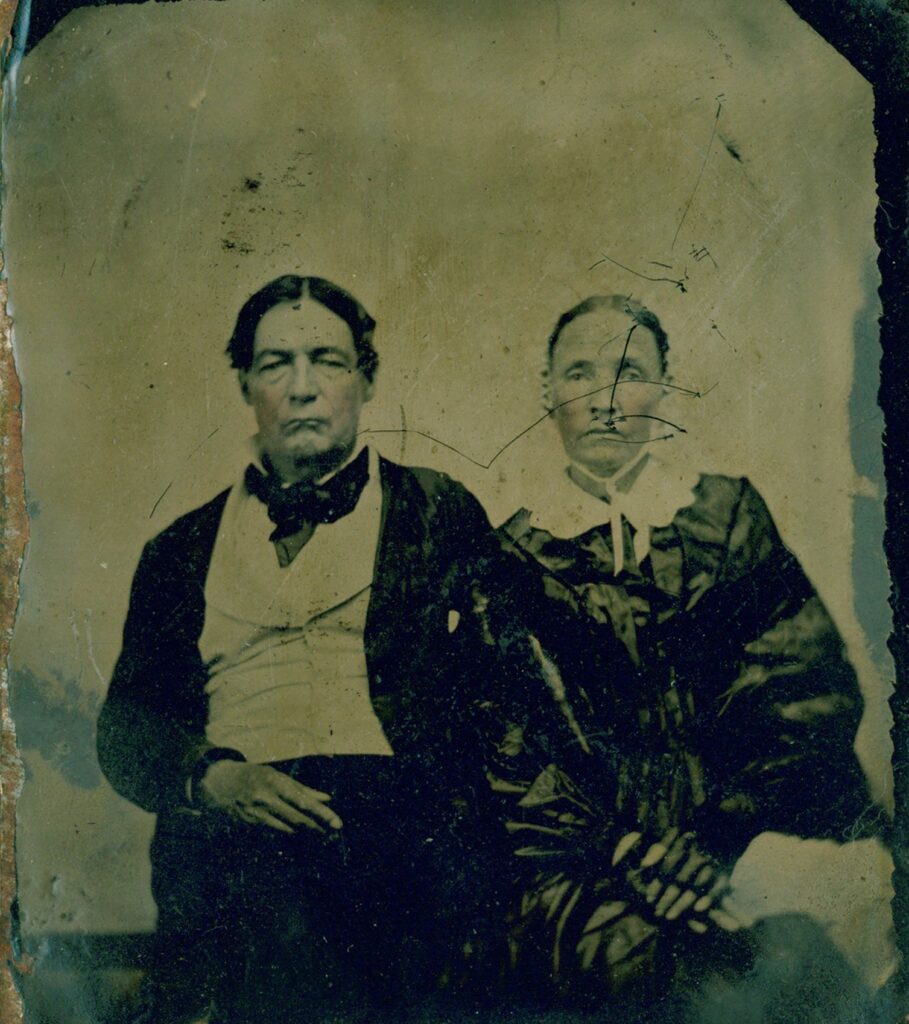
In 1855, the Wyandot signed a treaty that dissolved their tribal status with the Federal government, something that would be known as Termination in the 20th century. As part of this treaty, the government divided Wyandot land held in common and dealt it out in parcels to individuals who accepted US citizenship, whom the government referred to as “Citizen Wyandots.” Some, however, rejected the offer, choosing to attempt to maintain their tribal affiliation. Others, usually because they resisted this new federal imposition, were labeled “unfit for citizenship” by the US authorities. Those who did not accept citizenship moved to Oklahoma, where Chief Tauromee secured 20,000 acres from the Seneca.
Despite being declared citizens and no longer recognized as a tribal entity by the Federal authorities, the Wyandot in Kansas continued to function as an Indigenous nation, maintaining a tribal council and remaining largely independent of US control. In Oklahoma, the group known as the absentee Wyandot struggled without Federal annuities or decent landholdings.
In 1862, Chief Tauromee led a group of these absentee Wyandot back from Oklahoma and tried to reestablish Federal tribal recognition. The Kansas Wyandot and the Oklahoma Wyandotte struggled for power in Kansas for the next few years until the Oklahoma Wyandotte returned to their reservation and sought federal recognition there without the tribal council in Kansas. This resulted in the Treaty of 1867, which gave the chance for Citizen Wyandots in Kansas to reject US citizenship and reaffirm their tribal status. Many took this option, but the federal agent responsible for recording results sometimes wrote down the wrong responses or missed whole families. By clerical error, some Wyandot defaulted to American citizenship. The Wyandot nation was now split, with a federally recognized tribe in Oklahoma, and the Wyandot of Kansas, still very much a nation, but not one the US acknowledged.
Sources
For a more exhaustive list of secondary sources regarding Wyandot History, see the Research Resources Page
Selected Primary Sources about the early history of the Wyandot Nation in Kansas
- Wyandot in Kansas Territory, 1843: Rev. James Wheeler wrote a series of articles for the Western Christian Advocate newspaper chronicling the Wyandot removal. This clipping includes information about their arrival in Kansas.
- William Walker Jr.’s Journal, November 30, 1849 to June 25, 1854: William Walker Jr. was a leading Wyandot before and after Removal. This journal chronicles the nation’s time in Kansas and his role as provisional territorial governor.
- Wyandot Treaty 1843: Removal Treaty
- Wyandot Treaty 1850: This treaty attempted to gain compensation for the Wyandot for the broken promises in the Removal Treaty
- Wyandot Treaty 1855: This treaty granted the Wyandots who wanted to remain in Kansas US Citizenship
- Wyandot Treaty of 1867: This treaty created the Wyandotte Nation of Oklahoma as a federally recognized tribe.
- Wyandotte Roll of 1867: This document lists all of the Wyandot people who either consented to become citizens in 1855 or rejected citizenship. Under the Treaty of 1867, the enrollees could choose to remain citizens of the US or re-enroll with the Wyandotte Nation of Oklahoma.
Secondary Sources
- Kim Dayton, ‘“Trespassers, Beware!’: Lyda Burton Conley and the Battle for Huron Place Cemetery,” Yale Journal of Law and Feminism no. 8 (1996)
- James R. Shortridge, Kansas City and How it Grew, 1822-2011 (Lawrence: University Press of Kansas, 2012)
- Mary Stockwell, The Other Trail of Tears: The Removal of the Ohio Indians (Yardley: Westholme Publishing, 2014)
- Samantha Rae Dean, ‘“As Long as Grass Grows and Water Flows”: Lyda Conley and the Huron Indian Cemetery,” Master’s thesis (Fort Hays State University, 2016)
- Diane E. Miller, “Wyandot, Shawnee, and African American Resistance to Slavery in Ohio and Kansas,” dissertation (University of Nebraska, Lincoln, 2019)